When it comes to roof design, valleys play a crucial role in directing water away from your home and preventing leaks. Because of their importance, proper valley installation is essential to a roof’s durability and weather resistance. With help from a professional roofing company, homeowners can ensure their roof valleys are installed using the right technique for their home’s style, budget, and climate. The three most common roof valley installation methods are open, closed, and woven valleys each with its own advantages and ideal use cases.
What Is a Roof Valley?
- Open Roof Valley
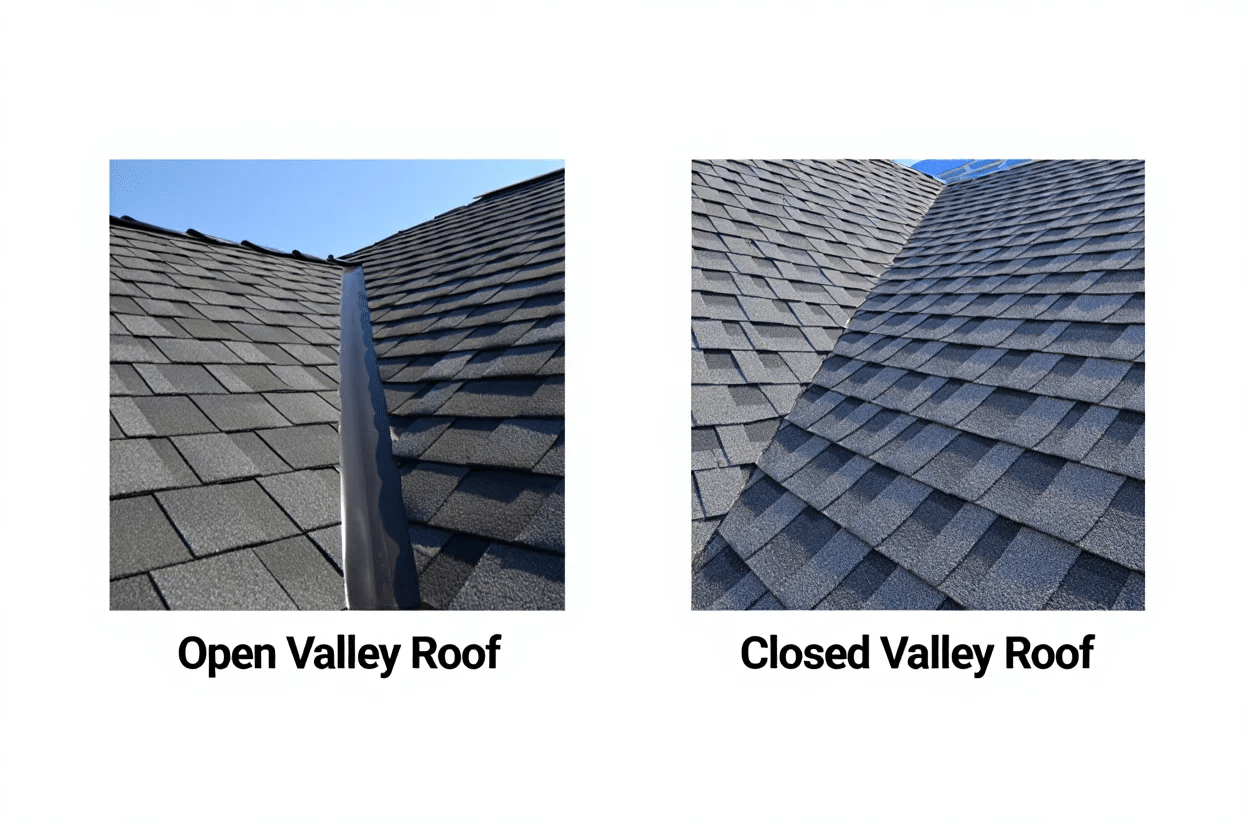
An open roof valley features a visible metal flashing that runs along the valley line. In this design, shingles or roofing panels from both sides of the roof stop short of the valley center, leaving the metal exposed.
Advantages of an Open Valley:
- Durability: The metal flashing adds extra protection against leaks and wear.
- Easy Maintenance: Any debris or damage is easier to spot and clean.
Potential Drawbacks:
- Slightly Higher Cost: Metal flashing and installation labor can increase costs slightly.
- Aesthetic Preference: Some homeowners prefer not to have visible metal on their roof.
- Closed Roof Valley
A closed roof valley hides the metal flashing beneath the shingles, creating a more seamless look.
Advantages of a Closed Valley:
- Clean Appearance: Because the metal is hidden, it offers a smooth, uniform look.
- Cost-Effective: Uses fewer materials compared to open valleys with metal flashing.
Potential Drawbacks:
- Not Ideal for Heavy Rain or Snow: Since water flows directly over shingles, it can wear them down faster in high-moisture areas.
- More Prone to Clogging: Leaves and debris can accumulate more easily than in an open valley.
- Woven Roof Valley
The woven roof valley is another shingle-based method where shingles from both roof planes are alternately woven across the valley line.
Advantages of a Woven Valley:
- Strong and Seamless Look: The interlacing shingles create a durable and attractive pattern.
- Cost-Effective: No need for metal flashing or special cuts.
Potential Drawbacks:
- Not Suitable for All Shingle Types: Works best with standard 3-tab shingles; architectural or dimensional shingles are too thick to weave properly.
- More Labor-Intensive: Requires precise installation to prevent bumps or uneven surfaces.
Conclusion
If you’re planning a new roof or need repairs, trust a professional roofing company like us. Contact Downtown Brooklyn Roofing at 718-690-9442 or visit 183 Bridge St Brooklyn, NY 11201, to handle your roof valley installation with precision and care.

